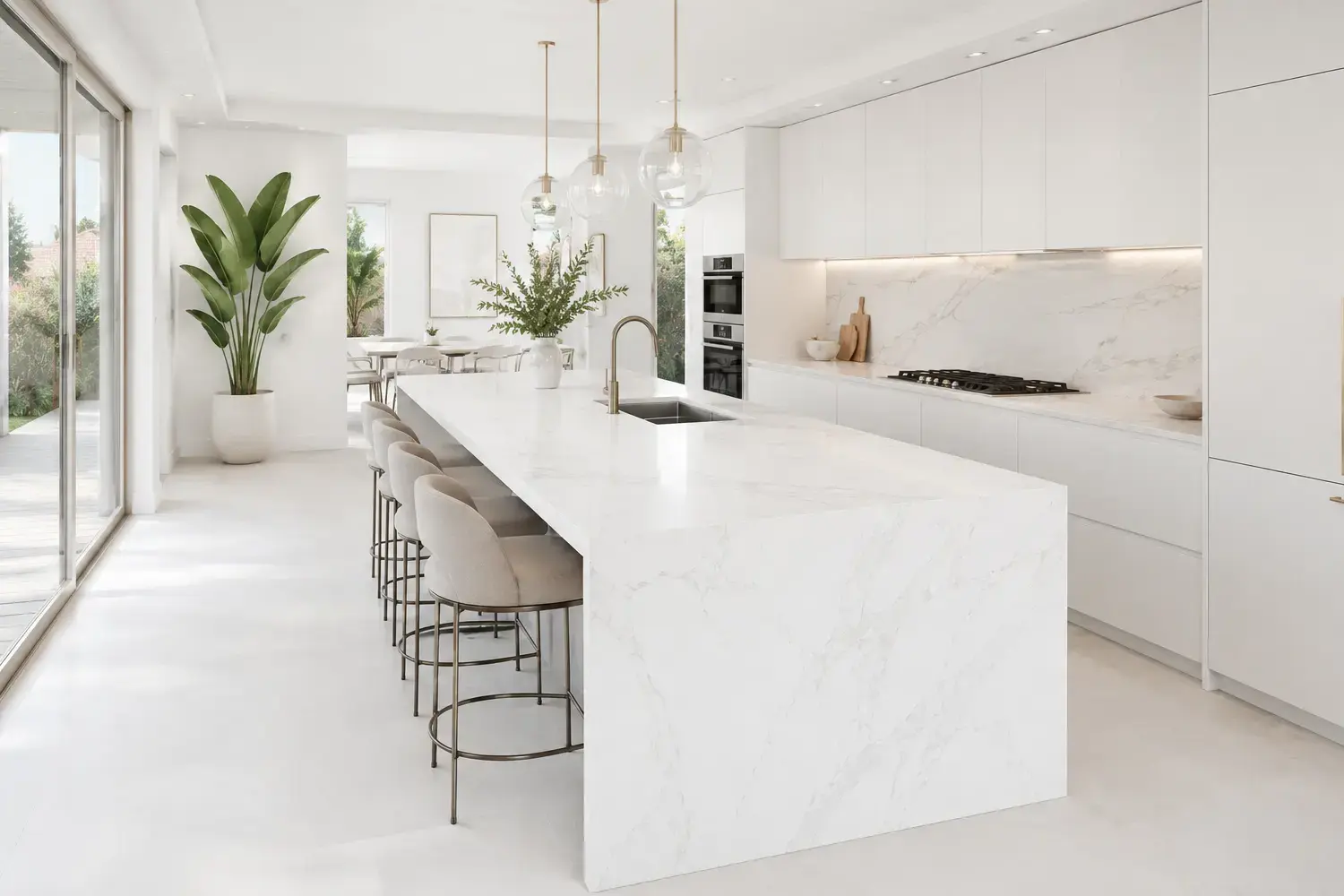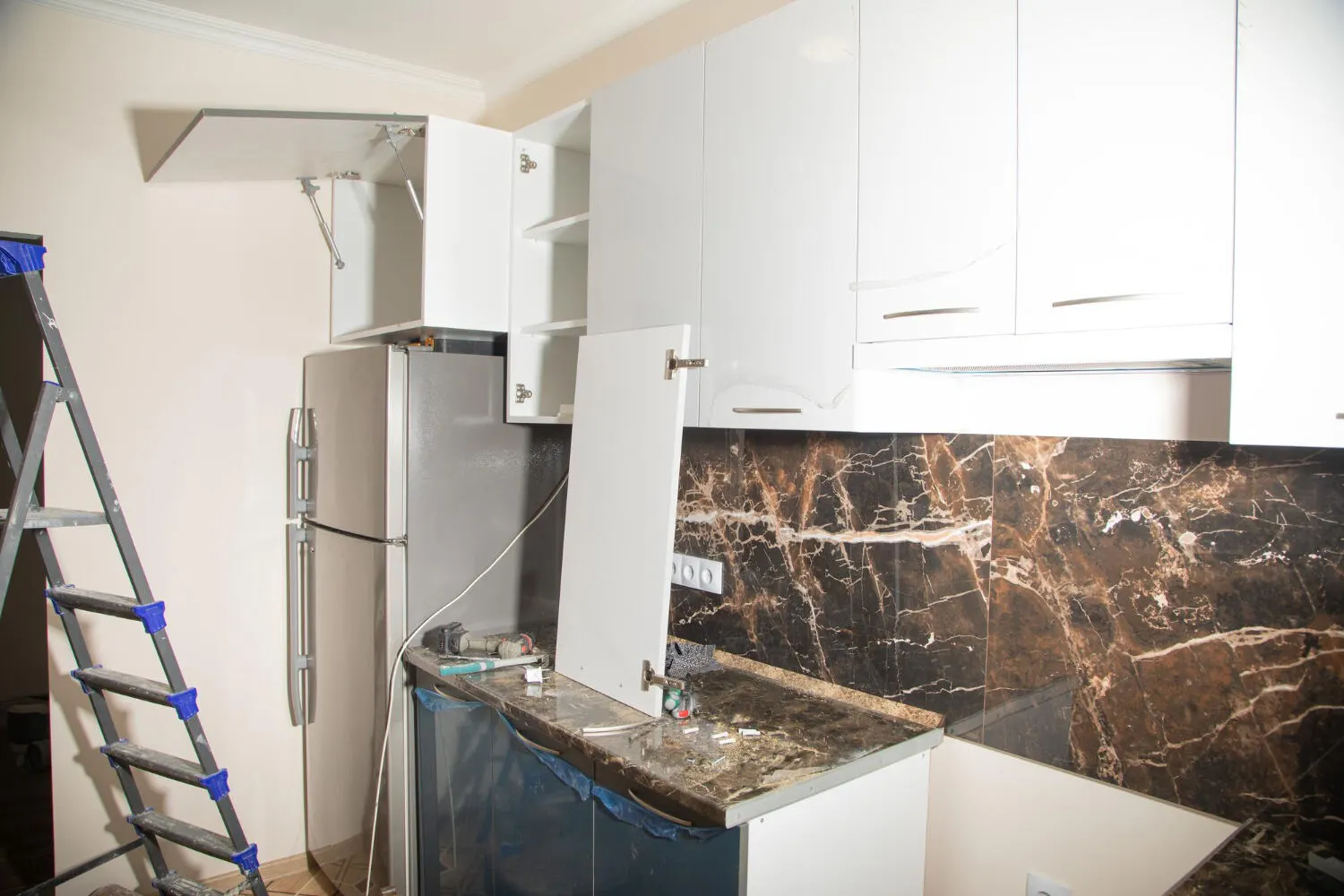
Remodeling your kitchen is an exciting opportunity to renovate one of the most crucial rooms in your house. Are you planning to renovate old cabinets, improve your countertops, or totally rethink your kitchen layout? Knowing what to expect during kitchen remodeling will make the process easier and less demanding. From initial planning to your final walkthrough, this detailed checklist for remodeling your kitchen will walk you through each step.
Phase 1: Design and Planning (Weeks 1-3)
First, determine what your kitchen really needs. Are you looking for a complete aesthetic makeover, enhanced lighting, improved workflow, or more storage space? Create a prioritized list of features, classifying them as necessities, desirable additions, and budget-dependent options.
Next, get ideas by looking at showrooms, Pinterest, and design publications. Make a mood board of your favorite kitchens, focusing on the design of the cabinets, the color schemes, the countertop materials, and the general layout. This visual reference will be really helpful when interacting with a design expert.
Schedule a professional design consultation. This is where Cabinet and Counter Expo makes a significant impact. Expect a thorough in-home evaluation of your space, identification of layout opportunities, budgeting advice, and precise 2D and 3D renderings that bring your vision to reality during your consultation. To make sure you realize your ideal vision, our design team will go over every detail of the project with you.
Phase 2: Material Selection and Budgeting (Weeks 2-4)
Make a realistic budget. The cost of a kitchen remodel varies greatly depending on its scope, but take these typical ranges into account:
- Minor kitchen renovations: $15,000-$35,000
- Mid-range remodeling: $35,000-$65,000
- High-end remodeling: Over $65,000
In general, budget allocation breaks down as follows: 40-50% of your budget goes toward cabinets and countertops, 15-20% goes toward appliances, and the remainder is divided among flooring, backsplash, and accessories. Always set aside a 10-20% buffer for unforeseen costs.
Give priority to cabinets. The layout, functionality, and style of your kitchen are all determined by the cabinets. Select from stock, semi-custom, or bespoke alternatives. Stock cabinets are inexpensive and readily available but have limited customization. Semi-custom cabinets balance flexibility with lead time, and custom cabinets provide complete personalization.
Make informed choices for countertops. Granite and natural stone are popular choices as they are unique and durable, but they need to be sealed. Quartz is non-porous, low maintenance, and complements any style. Marble is elegant but requires careful maintenance, whereas laminate is affordable and comes in modern designs.
Not sure which cabinets or countertops are right for you? Cabinet and Counter Expo will create a 3D design of your layout where you can explore different cabinet colors, countertop materials, and hardware options
Phase 3: Permits and Pre-Construction (Weeks 3-5)
Get the required permissions as your materials are being ordered. The majority of major kitchen renovations need permits if you’re moving walls, installing or relocating plumbing and electricity, or adding new appliances or ventilation systems. Lead times usually last between one and three weeks.
Get your house ready by speaking with your contractor about parking and access, establishing a temporary kitchen area, making plans for dust containment, and organizing for the secure storage of valuables. Select a competent remodeling contractor who will oversee every aspect with expertise and transparency.
Phase 4: Demolition and Construction (Weeks 5-8)
This stage involves removing old cabinets, appliances, and countertops; removing backsplash tiles; and, if necessary, pulling up flooring. There will be dust, noise, and restricted access to the kitchen.
Following that is structural and utility work, which may include wall modifications, electrical and plumbing upgrades, and HVAC modifications. This stage concludes with a building inspection.
The walls are painted, new flooring is put down, and drywall is then installed. Painting before cabinet installation ensures cleaner lines and easier application. Flooring usually extends under appliances, but not cabinets.
Phase 5: Cabinet, Countertop, and Fixture Installation (Weeks 9-12)
Base cabinets are the first step in cabinet installation. They must be precisely leveled and fastened before the wall cabinets and hardware can be installed. Professional templating, which accurately measures everything, including sink cutouts, cooktop areas, and backsplash sizes, is used after the cabinets are placed in the proper location.
Early material selection is crucial since natural stone or quartz countertops usually take two to four weeks to manufacture and install. The last items to be installed are your sink, faucet, dishwasher, appliances, range hood, backsplash tile, pendant lights, and under-cabinet lighting.
Do a thorough walk-through with your contractor. Prior to making the final payment, make sure that all of the materials, finishes, and functions satisfy your requirements and resolve any punch list items.
Why Partner with Cabinet and Counter Expo?
Cabinet and Counter Expo offers comprehensive expertise at every stage. We provide expert design consultations with precise measurements, professional 2D and 3D renderings, advice on layout and design coherence, a large selection of products, and expert installation through trusted partners. We guarantee that your renovated kitchen will surpass your expectations because of our dedication to providing individualized service at reasonable rates and paying close attention to every detail.
Kitchen Remodeling Checklist: To-Do List
- Decide what you want for your kitchen renovation
- Gather design inspiration from multiple sources
- Schedule a professional design consultation
- Make a realistic budget with 10-20% contingency
- Choose the style, material, and finish for your cabinets
- Select the material and color for your countertops
- Verify your contractor’s licensing, insurance, and reviews
- Get necessary building permits
- Schedule cabinet and countertop fabrication
- Get your home ready for construction
- Plan how to setup a temporary kitchen during renovations
Your dream kitchen is closer than you think. Learn about Cabinet and Counter Expo’s seamless approach to kitchen remodeling in Virginia and how they can help transform your kitchen dreams into reality
FAQ
How long does a kitchen remodel usually take?
A standard kitchen remodel usually takes about 3 to 4 months from start to finish. However, how long it takes can change based on how big the project is, if you want custom cabinets, what kind of countertops you pick, and if there are any changes to the building structure. More complicated projects with custom details can take 4 to 6 months or even longer.
How do I match my cabinets and countertops?
The trick is to pick colors and finishes that look good together. White cabinets look great with dark countertops for a modern style. Light wood cabinets go well with light marble for a classic feel. Dark cabinets stand out against white or light gray countertops. Our design team can assist you in trying out different combinations using 2D and 3D images before you make your final choices.
What to expect during kitchen remodeling?
Expect your kitchen to be only partly usable or completely closed while the remodeling is going on. This means you’ll have to set up a temporary area for cooking and storing food. The workers will take care of demolition, structural work, updating the electrical and plumbing systems, and adding finishing touches. You should be ready for some noise, dust, and regular visits from the workers, along with necessary checks at key stages. When the project is almost finished, you will walk through the space to make a list of any final things to fix and to ensure everything matches the agreed design and quality.